

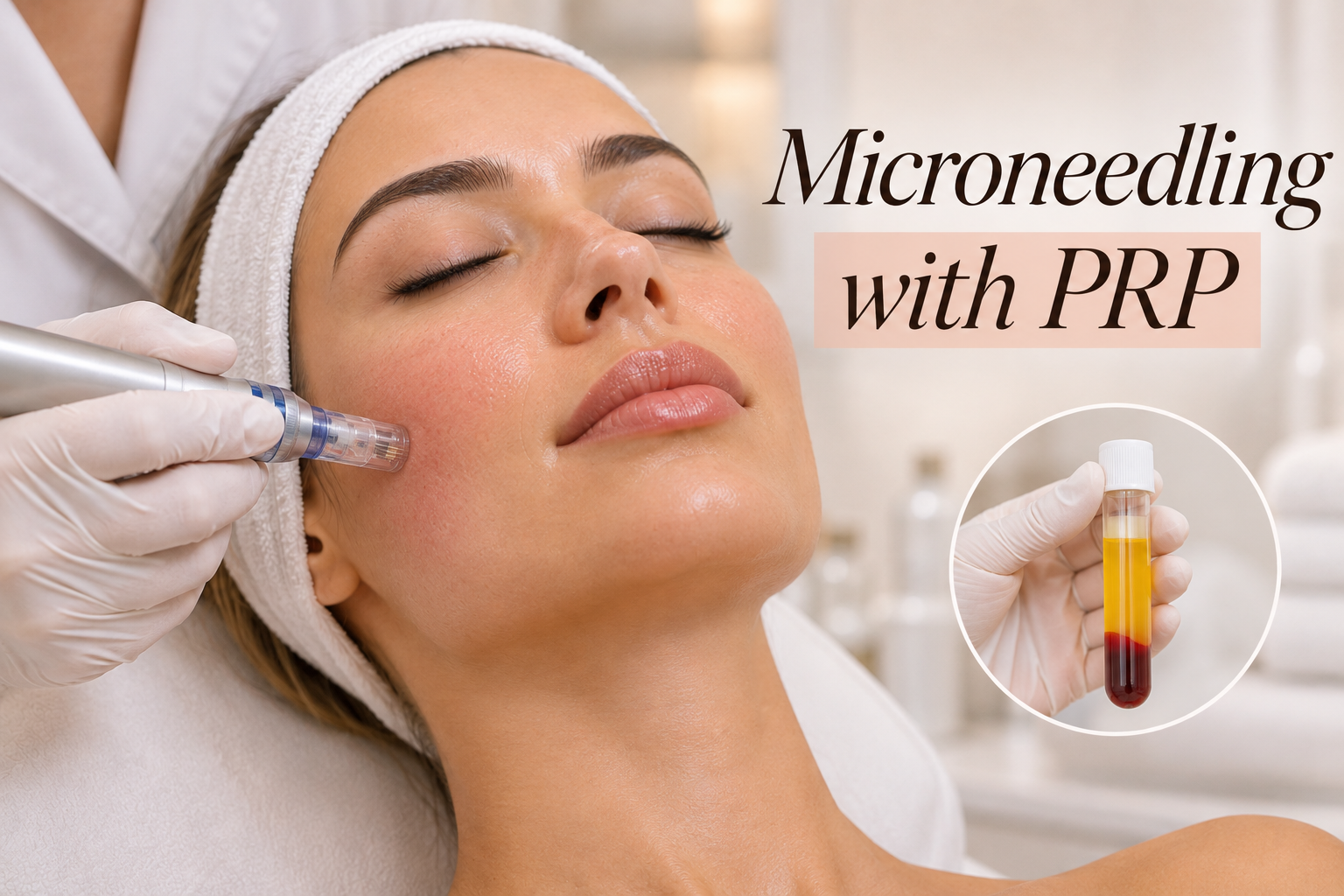
If you are researching treatments for acne scars, uneven skin texture, or early signs of aging, you may have come across microneedling with PRP.
This combination treatment brings together two approaches: microneedling, which creates controlled micro-injuries in the skin, and platelet-rich plasma (PRP), a preparation made from a patient’s own blood.
The goal is to support the skin’s natural repair processes and potentially improve certain cosmetic concerns. However, the results vary, and the evidence supporting the addition of PRP is not equally strong for every condition.
At Effortless Touch Miami, we believe that understanding a procedure before undergoing it is essential. Knowing how a treatment works, what recovery involves, and which risks to consider can help you make an informed decision.
In this guide, we explain the science behind microneedling and PRP, their potential benefits, the treatment process, recovery expectations, safety considerations, and questions to ask before scheduling a consultation.
What Is Microneedling?
Microneedling is a minimally invasive procedure that uses a device containing very small needles to create controlled punctures in the skin.
These punctures stimulate the body’s natural wound-healing response, which includes processes involved in collagen remodeling.
Collagen is a structural protein that contributes to the skin’s strength and appearance.
Because of this mechanism, microneedling is sometimes called collagen induction therapy.
How Does Microneedling Work?
During the procedure, a trained healthcare professional moves a microneedling device across selected areas of the skin.
The device creates numerous small channels at controlled depths.
The skin responds through a healing process that may gradually improve the appearance of certain scars, fine lines, and uneven texture.
Results develop over time rather than appearing immediately.
The FDA has authorized certain microneedling devices for specific indications, including improving the appearance of facial acne scars, facial wrinkles, and abdominal scars in adults aged 22 or older.
Authorization depends on the individual device and its intended use. It does not apply automatically to every microneedling device or treatment protocol.
What Is Platelet-Rich Plasma (PRP)?
Platelet-rich plasma is a blood-derived preparation containing a concentration of platelets.
Platelets play an important role in blood clotting and contain substances involved in tissue repair and cellular signaling.
PRP is prepared from a small sample of the patient’s own blood.
The sample is processed using a centrifuge, which separates blood components according to their physical characteristics.
A clinician then collects the platelet-rich portion for the intended procedure.
Why Is PRP Used in Aesthetic Treatments?
PRP has been investigated for various medical and cosmetic applications.
In aesthetic medicine, researchers have studied whether PRP may support tissue repair or improve outcomes when used alongside procedures such as microneedling.
Some clinical studies suggest potential benefits, particularly for certain acne scars.
However, study methods differ, including how PRP is prepared, applied, and measured.
The evidence is not sufficient to guarantee that adding PRP will improve results for every patient or every skin concern.
How Does Microneedling with PRP Work?
Microneedling with PRP combines a controlled skin-needling procedure with a preparation derived from the patient’s blood.
A typical treatment may involve collecting blood, preparing PRP, performing microneedling, and applying PRP according to the clinician’s protocol.
Some practitioners use different application techniques, and these should not be assumed to have equivalent evidence or safety profiles.
The Role of Microneedling
Microneedling creates controlled skin injuries intended to initiate remodeling and collagen production.
This process may gradually reduce the appearance of certain depressed scars and fine lines.
The Proposed Role of PRP
PRP contains platelets and signaling molecules associated with tissue repair.
Researchers have investigated whether adding PRP to microneedling may influence healing and cosmetic outcomes.
Although some studies report improved results, research remains heterogeneous.
An Important FDA Safety Distinction
FDA authorization of a microneedling device does not mean the FDA has cleared that device for use with PRP.
The FDA states that it has not authorized microneedling devices to deliver blood products, including PRP, into the skin. It has not reviewed the safety and effectiveness of these device-and-product combinations.
This distinction should be discussed with the treating clinician before choosing a combined procedure.
Potential Benefits of Microneedling with PRP
The possible benefits depend on the patient’s condition, the microneedling device, treatment technique, and PRP protocol.
1. Improvement in Certain Acne Scars
One of the most studied applications of microneedling is the treatment of atrophic acne scars.
These scars appear as depressions in the skin after acne-related inflammation damages underlying tissue.
Microneedling may stimulate collagen remodeling, making certain scars less noticeable over time.
Research has also investigated whether PRP can improve outcomes when added to microneedling.
Some studies report additional improvement, but results are not consistent enough to promise a particular degree of scar reduction.
2. Smoother-Looking Skin Texture
Microneedling may improve the appearance of uneven texture by promoting gradual skin remodeling.
This can be relevant for selected patients with superficial irregularities or certain types of scarring.
PRP is sometimes added with the intention of supporting this process, although its additional benefit for general texture concerns is less certain.
3. Improvement in Fine Lines
Some FDA-authorized microneedling devices have indications involving facial wrinkles.
Changes generally occur gradually and depend on the severity of the lines and the individual’s response.
Microneedling is not equivalent to Botox, dermal fillers, or surgical procedures.
Each treatment addresses different concerns.
4. Possible Improvement in Skin Appearance
Some patients report improved skin smoothness or overall appearance following a series of treatments.
However, visible changes may reflect multiple factors, including temporary swelling, skincare, and natural healing.
Claims that PRP reliably creates a specific glow or permanently rejuvenates the skin are not supported by consistent high-quality evidence.
5. A Nonsurgical Treatment Option
Microneedling generally does not require surgical incisions or general anesthesia.
Nevertheless, it remains a medical procedure that penetrates the skin and can cause complications.
Adding PRP also introduces blood collection, preparation, and handling considerations.
Microneedling with PRP for Acne Scars
Acne scarring is one of the primary reasons patients investigate this combination.
Different scar types respond differently to treatment.
Rolling Scars
Rolling scars create broad, shallow depressions that give the skin a wavy appearance.
Some may respond to collagen-inducing procedures, while others require treatments that address scar tissue beneath the skin.
Boxcar Scars
Boxcar scars have more defined edges and can vary in depth.
Treatment selection depends on their size, depth, and distribution.
Ice Pick Scars
Ice pick scars are narrow and relatively deep.
These scars may respond less effectively to microneedling alone and may require alternative procedures.
Why Scar Assessment Matters
The best approach depends on scar type, skin tone, active acne, and medical history.
Some patients benefit from a combination of different treatments rather than one procedure.
A dermatologist can help determine whether microneedling, another treatment, or a combined approach is appropriate.
Microneedling with PRP vs. Regular Microneedling
The principal difference is the addition of platelet-rich plasma.
| Feature | Regular Microneedling | Microneedling with PRP |
|---|---|---|
| Main procedure | Controlled skin punctures | Controlled punctures plus PRP |
| Blood collection | Not required | Usually required |
| Main mechanism | Skin remodeling response | Skin remodeling plus proposed PRP effects |
| Evidence | Supports selected device-specific indications | Some promising studies, but additional benefits remain uncertain |
| Procedure complexity | Lower | Higher due to PRP preparation |
| Recovery | Redness and sensitivity possible | Similar skin reactions, plus blood-draw considerations |
| Cost | Generally lower | Often higher |
| FDA device authorization | Certain devices and indications authorized | No microneedling devices authorized for delivering PRP |
Is PRP Always Better?
No.
The addition of PRP should not be presented as automatically superior.
Some studies suggest improved acne scar outcomes, but the quality and consistency of evidence vary.
For other cosmetic concerns, the additional benefit may be unclear.
The decision should consider potential benefits, risks, costs, and available alternatives.
What Happens During a Microneedling with PRP Appointment?
The exact process varies by clinic and treatment protocol.
Step 1: Medical Consultation
Your clinician should review your concerns, medical history, medications, and expectations.
Important information includes:
- Previous cosmetic procedures
- Current skincare products
- Active acne or skin infections
- History of cold sores
- Bleeding or clotting disorders
- Blood-thinning medications
- Immunosuppressive conditions or treatments
- Diabetes and wound-healing problems
- History of abnormal scarring
- Pregnancy or breastfeeding
- Recent isotretinoin use
The clinician should also explain whether the proposed combination is appropriate and discuss its regulatory status.
Step 2: Skin Assessment
Your provider examines the skin to determine the nature and severity of your concerns.
For acne scars, the assessment may include scar depth, type, and distribution.
Skin tone and pigmentation history are also relevant because microneedling can cause changes in skin color.
Step 3: Blood Collection
If PRP is part of the plan, a small blood sample is collected.
Blood collection can cause temporary discomfort, bruising, lightheadedness, or other complications.
Step 4: PRP Preparation
The blood is processed in a centrifuge.
Proper collection, handling, and infection-control procedures are essential.
Patients should ask about sterile processing and whether the preparation system is appropriate for the intended use.
Step 5: Skin Preparation
The treatment area is cleansed.
A topical anesthetic may be applied to reduce discomfort.
Patients should disclose allergies or previous reactions to anesthetics.
Step 6: Microneedling
The clinician performs microneedling using the selected device and protocol.
Needle depth and treatment intensity depend on the area, skin condition, and device instructions.
A new sterile needle cartridge should be used for each treatment session.
Step 7: PRP Application
The clinician may apply the prepared PRP according to the treatment protocol.
Because microneedling devices have not been authorized by the FDA for delivery of PRP, the provider should explain the evidence, risks, and regulatory considerations of the proposed combination.
Step 8: Recovery Instructions
After the procedure, patients receive instructions about cleansing, moisturizers, sun protection, activity restrictions, and warning signs.
These instructions are especially important because the skin barrier has been temporarily disrupted.
Does Microneedling with PRP Hurt?
Discomfort varies depending on needle depth, treatment area, individual sensitivity, and anesthetic use.
Many patients experience pressure, scratching, or a prickling sensation.
Topical anesthetic may reduce discomfort.
The blood draw required for PRP may cause additional temporary discomfort.
Significant or unexpected pain should be reported to the provider immediately.
Microneedling with PRP Recovery Timeline
Recovery depends on treatment intensity, skin characteristics, and individual healing.
The following is a general guide rather than a guaranteed timeline.
First 24 Hours
The treated skin may appear red, swollen, or darker than usual, depending on skin tone.
Patients may experience warmth, tightness, or a sensation similar to mild sunburn.
Small areas of pinpoint bleeding or temporary tenderness can occur.
Follow the clinician’s instructions for cleansing and product use.
Days 2–3
Redness and swelling may begin to improve.
The skin may feel dry, tight, or rough.
Some patients experience mild peeling.
Avoid picking or scrubbing the skin.
Days 4–7
Many temporary reactions continue to improve.
However, recovery can take longer after more intensive treatment.
Persistent or worsening symptoms should be assessed.
Following Weeks
Visible changes related to collagen remodeling may develop gradually.
The final cosmetic response cannot be accurately judged immediately after treatment.
Following Months
Improvement may continue over several months.
Some patients require multiple sessions, and not everyone experiences meaningful improvement.
Microneedling with PRP Aftercare
Aftercare helps reduce avoidable irritation and supports normal healing.
Use Only Recommended Skincare Products
Freshly treated skin can be more sensitive to ingredients that are normally well tolerated.
Your clinician may recommend a gentle cleanser and a suitable moisturizer.
Avoid introducing unfamiliar active ingredients immediately after treatment.
Be Careful With Retinoids and Exfoliating Acids
Retinol, tretinoin, glycolic acid, salicylic acid, and other active ingredients may cause irritation during recovery.
Ask your clinician when to resume them.
Do not discontinue prescribed medications without guidance from the prescribing professional.
Avoid Picking or Scrubbing
Peeling and dryness may occur.
Picking the skin can increase irritation and potentially contribute to scarring or pigmentation changes.
Protect Your Skin From Sun Exposure
Sun protection is particularly important after procedures that temporarily affect the skin barrier.
Follow your provider’s recommendations about when and how to apply sunscreen.
Avoid tanning and unnecessary direct sun exposure during recovery.
Follow Makeup Instructions
The American Academy of Dermatology recommends waiting at least 24 hours before applying makeup after microneedling.
Your clinician may recommend a longer interval based on the treatment.
Monitor for Signs of Infection
Increasing pain, spreading redness, pus, fever, or other concerning symptoms require prompt medical evaluation.
You can review additional general guidance on the Effortless Touch Aftercare Instructions page.
Editorial note: Update this link if the page is moved to /before-after-care/.
How Long Does It Take to See Results?
Microneedling results develop gradually because collagen remodeling takes time.
Some patients notice early changes within several weeks.
More meaningful improvement may take several months.
The number of treatments needed depends on the condition being addressed.
For acne scars, multiple sessions are often considered.
However, no specific treatment count or degree of improvement can be guaranteed.
The additional contribution of PRP may vary according to preparation and treatment technique.
How Many Sessions of Microneedling with PRP Are Needed?
There is no universal number of sessions.
Factors that may influence treatment planning include:
- Scar type and depth
- Skin condition
- Treatment goals
- Device and technique
- Individual healing
- History of pigmentation changes
- Response to previous sessions
For acne scars, dermatologists may recommend a series of microneedling treatments spaced over several weeks.
However, these schedules should not be automatically applied to every PRP combination protocol.
A qualified clinician should reassess the skin before additional procedures.
How Long Do Microneedling Results Last?
Results vary according to the skin concern, individual healing, and natural changes in the skin over time.
Some improvement in scar appearance may persist, while age-related changes and other skin conditions continue.
Maintenance may be considered in selected cases, but it is not necessary or beneficial for everyone.
PRP does not make the results permanent.
Is Microneedling with PRP Safe?
Microneedling has recognized risks, even when performed using an FDA-authorized device.
Combining it with PRP adds considerations involving blood collection, preparation, sterility, and application.
Common Side Effects
Possible temporary reactions include:
- Redness
- Swelling
- Tightness
- Dryness
- Mild discomfort
- Bruising
- Peeling
- Pinpoint bleeding
These reactions often improve during recovery.
Less Common Complications
Potential complications include:
- Infection
- Scarring
- Hyperpigmentation
- Hypopigmentation
- Cold sore reactivation
- Persistent irritation
- Allergic reactions to products or anesthetics
Risks Related to Blood Handling
PRP preparation requires strict infection-control practices.
Improper blood handling, equipment contamination, or inadequate sterilization can create additional risks.
Patients should ask how blood samples are processed and how equipment is handled between procedures.
FDA Regulatory Considerations
The FDA has authorized certain microneedling devices for specific indications.
However, it has not authorized microneedling devices to deliver PRP or other blood products into the skin.
This means the agency has not established the safety and effectiveness of that combination through its device authorization process.
A provider should not describe microneedling with PRP as an FDA-approved combination treatment.
Who Should Avoid Microneedling with PRP?
The procedure may be unsuitable for some patients.
Active Skin Infections
Microneedling should generally be postponed when an active infection is present in the treatment area.
Active Inflammatory Acne
Painful or deeply inflamed acne lesions may require treatment before microneedling.
Bleeding Disorders
Conditions that affect blood clotting may increase procedural risks.
Blood-Thinning Medications
Anticoagulants and certain other medications may increase bleeding or bruising.
Never stop prescribed medication without approval from the responsible clinician.
Impaired Wound Healing
Conditions such as uncontrolled diabetes or immune suppression may affect recovery.
History of Keloid Scarring
People prone to raised or abnormal scars require careful assessment.
Pregnancy or Breastfeeding
Elective microneedling may be postponed because of limited safety information and individual clinical considerations.
Recent Isotretinoin Use
Treatment timing should be assessed individually.
Recommendations can vary by device and clinical circumstances, and certain device labeling includes specific restrictions.
Skin Tone and Pigmentation History
Microneedling can be used in patients with different skin tones, but post-inflammatory pigmentation changes remain possible.
The provider should evaluate individual risk and device-specific evidence.
Microneedling with PRP for Darker Skin Tones
People with medium and darker skin tones may be particularly concerned about post-inflammatory hyperpigmentation.
Microneedling is sometimes considered because it does not rely on the same mechanism as certain energy-based resurfacing treatments.
However, that does not eliminate pigmentation risks.
A clinician should consider:
- Previous hyperpigmentation
- History of melasma
- Recent sun exposure
- Skin inflammation
- Treatment depth
- Device-specific safety data
- Appropriate aftercare
Choosing an experienced medical professional is essential.
Microneedling with PRP vs. Radiofrequency Microneedling
Microneedling and radiofrequency microneedling are not the same procedure.
Traditional microneedling uses needles to create controlled punctures.
Radiofrequency microneedling adds energy that heats tissue.
The treatment mechanisms, devices, indications, and risks differ.
In October 2025, the FDA issued a safety communication about serious complications reported with certain uses of radiofrequency microneedling, including burns, scarring, fat loss, disfigurement, and nerve damage.
These risks should not be assumed to be identical to those of conventional microneedling.
If a clinic offers both procedures, ask which device and technique are being recommended and why.
Microneedling with PRP vs. Chemical Peels
Chemical peels and microneedling address different concerns through different mechanisms.
Chemical peels use selected chemical solutions to exfoliate or resurface the skin.
Microneedling uses controlled punctures to initiate a remodeling response.
For some pigmentation concerns, a clinician may recommend topical therapy or a carefully selected peel.
For certain depressed acne scars, microneedling may be considered.
The better option depends on the diagnosis, skin tone, treatment history, and risk profile.
Combining procedures should only be considered after appropriate medical assessment.
Is Microneedling with PRP Worth the Cost?
Microneedling with PRP often costs more than conventional microneedling because it involves additional equipment, blood collection, and processing.
However, the additional cost does not guarantee better results.
Before deciding, ask:
- What specific concern is being treated?
- What evidence supports adding PRP for that concern?
- What results are realistic?
- How many sessions might be considered?
- What are the risks of the combined procedure?
- What is included in the quoted price?
- Are follow-up visits included?
- What alternatives are available?
The value of treatment depends on medical suitability, realistic expectations, and your individual priorities.
Choosing a Microneedling Provider in Miami
If you are researching microneedling with PRP in Miami, provider qualifications and safety protocols should be central to your decision.
Consider asking:
- Who will perform the procedure?
- What medical qualifications and training do they have?
- Which microneedling device will be used?
- Is the device authorized for the intended indication?
- How are needle cartridges handled?
- How is PRP prepared?
- What sterile-processing procedures are followed?
- What complications are possible?
- What is the emergency response plan?
- What follow-up care is available?
A consultation should also cover whether the combined treatment is medically appropriate and whether other procedures might better address your concerns.
Explore Effortless Touch Miami’s services or contact the team to ask about available treatment options.
Frequently Asked Questions About Microneedling with PRP
What is microneedling with PRP?
It is a combination procedure involving controlled skin punctures and platelet-rich plasma prepared from the patient’s own blood. The proposed goal is to support skin remodeling, although additional benefits from PRP vary by indication and evidence.
Is microneedling with PRP FDA-approved?
The FDA has authorized certain microneedling devices for specific indications, but it has not authorized microneedling devices for delivering PRP into the skin. The combination should not be described as FDA-approved.
Does microneedling with PRP help acne scars?
Microneedling can improve the appearance of certain acne scars. Some studies suggest that adding PRP may improve outcomes, but the evidence varies and results are not guaranteed.
How long is recovery after microneedling with PRP?
Temporary redness, swelling, dryness, and sensitivity often improve within several days to a week. More intensive treatments may require longer recovery.
Is microneedling with PRP painful?
Patients may experience prickling, pressure, or discomfort. Topical anesthetic is often used, but pain levels vary.
How many treatments will I need?
The number depends on the condition, severity, individual response, and clinical plan. Multiple sessions may be considered for acne scars.
Can I wear makeup after microneedling?
The American Academy of Dermatology recommends waiting at least 24 hours after microneedling before applying makeup. Follow your provider’s specific instructions.
Is PRP better than microneedling alone?
Not necessarily. Some studies suggest additional benefits for certain acne scars, but the evidence does not establish that PRP is always superior.
Can microneedling cause dark spots?
Yes. Hyperpigmentation or hypopigmentation can occur, particularly if the skin becomes significantly inflamed or treatment is inappropriate for the patient.
Is microneedling with PRP suitable for all skin types?
No treatment is appropriate for everyone. Medical history, skin conditions, pigmentation risk, and the specific treatment protocol must be evaluated.
Final Thoughts: Is Microneedling with PRP Right for You?
Microneedling with PRP is a combination treatment that has attracted attention for its potential role in skin remodeling and acne scar management.
Microneedling itself has evidence supporting selected uses, including improvement in the appearance of certain acne scars and wrinkles.
The addition of PRP remains an area of ongoing research.
Some studies suggest potential advantages, but benefits are not guaranteed, and the FDA has not authorized microneedling devices for delivering PRP.
Before choosing treatment, consider the evidence, potential risks, provider qualifications, and your personal goals.
Explore Skin Rejuvenation Treatments at Effortless Touch Miami
Interested in learning more about microneedling, PRP, or other aesthetic treatments?
At Effortless Touch Miami, you can explore available services and request a consultation to discuss your concerns and treatment options.
An informed treatment decision starts with a professional assessment and a clear understanding of potential benefits and risks.
Medical References
- U.S. Food and Drug Administration — Microneedling Devices
- FDA — Microneedling Devices: Benefits, Risks, and Safety
- American Academy of Dermatology — Microneedling Can Fade Scars, Uneven Skin Tone, and More
- American Academy of Dermatology — Acne Scars: Consultation and Treatment
Medical disclaimer: This article is intended for educational purposes only and does not replace individualized medical advice, diagnosis, or treatment. Microneedling and PRP involve potential risks. Consult an appropriately licensed healthcare professional before undergoing any aesthetic procedure.